
Welcome to FanNation, Part of the Sports Illustrated Media Group
Find and follow your favorite team here. Get the latest news and updates about the team you care most about.
Rebels Are Aggressively Attacking This Transfer Portal | Locked On Ole Miss Podcast
Lane Kiffin and Ole Miss Rebels football are attacking the Transfer Portal, and Chris Beard has also made some noise.
Recent Articles
Toronto Blue Jays' Top Prospect Hits Injured List with Undisclosed Ailment
Toronto Blue Jays' top prospect Ricky Tiedemann has been placed on the seven-day injured list at Triple-A Buffalo, but there is no reason given at the moment. He has struggled in the early going.
What if Raiders' O’Connell was a QB in this Year's 2024 NFL Draft Class?
Where would Las Vegas Raiders quarterback Aidan O'Connell go in this year's NFL Draft?
Eagles Reportedly Receiving Trade Interest For Superstar But Deal Unlikely
Could the Eagles actually end up trading one of their best offensive players?
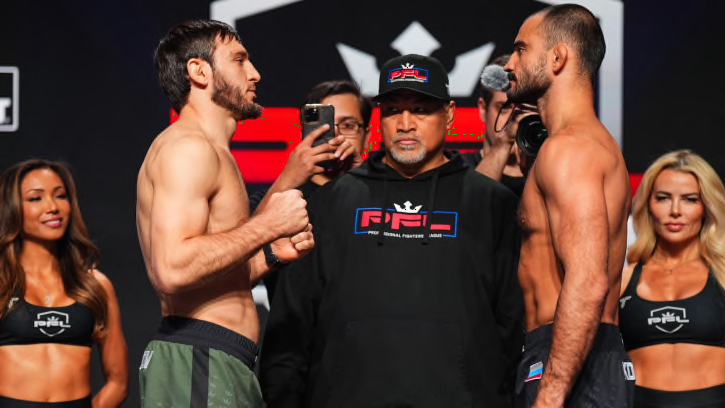
PFL Chicago 2024 Weigh-In Results: One Fighter Misses Weight
Find out what happened at the official weigh-ins for PFL Chicago.
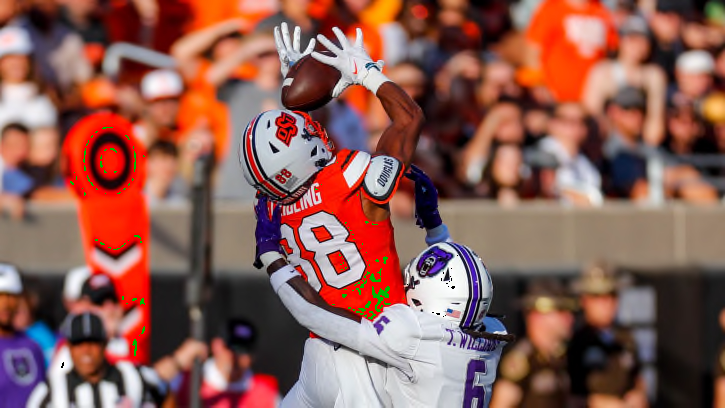
Cowboys Wide Receiver De'Zhaun Stribling Will Add to Oklahoma State's Offensive Potential
The talented wide receiver corps will benefit from De'Zhaun Stribling returning to the field after suffering an injury a season ago.
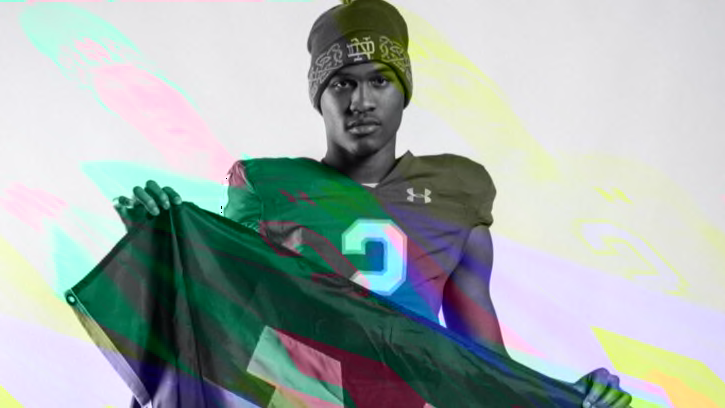
Notre Dame Recruiting: Irish Set To Host Talented Group Of Blue-Gold Game Visitors
Notre Dame has a talented group of visitors planning to visit for the Blue-Gold Game
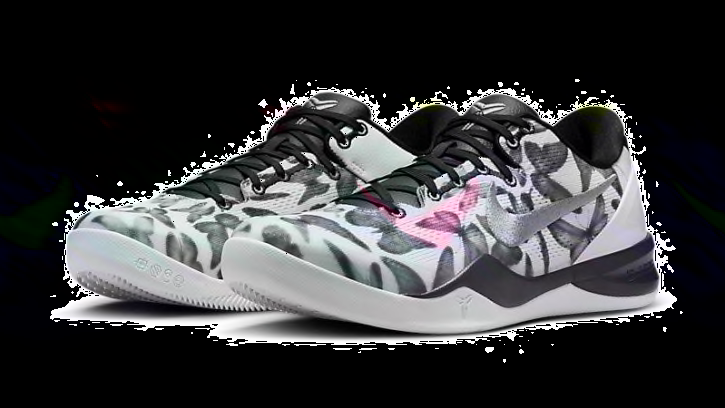
The Nike Kobe 8 "Mambacita" Celebrates Gigi Bryant's Birthday
The Nike Kobe 8 Protro "Mambacita" releases on May 1 in full-family sizing.
Cardinals Superstar Linked To Yankees In Possible Blockbuster Trade
Could the Cardinals and Yankees agree to a blockbuster trade this summer?
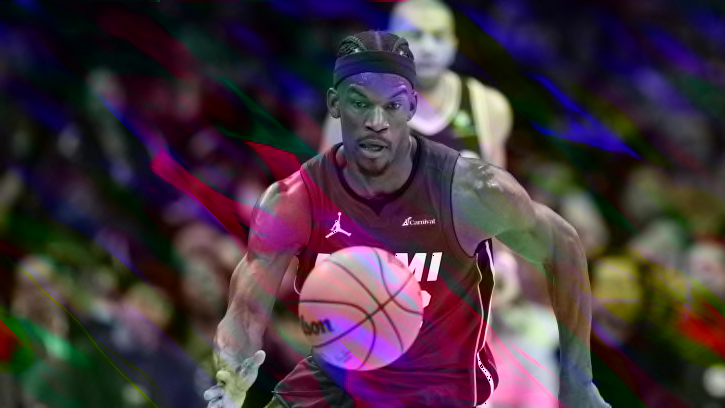
Jimmy Butler’s Injury vs. Sixers Will Have Major Impact on Miami Heat
After falling short to the Philadelphia 76ers, the Miami Heat will roll without Jimmy Butler.
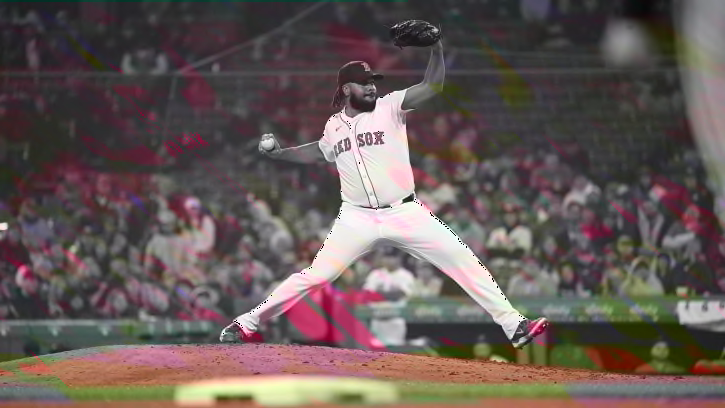
Red Sox Star Linked To Phillies As Possible Blockbuster Trade Candidate
Should the Red Sox actually consider trading the star hurler this season?
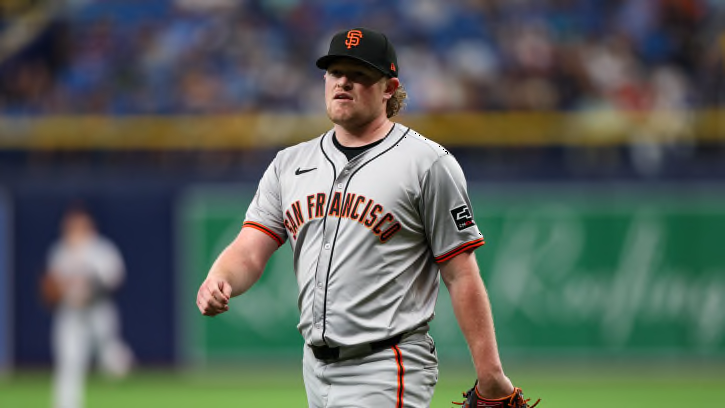
San Francisco Giants' Righty Throws Historic Gem in Win on Thursday
Sure, the San Francisco Giants acquired two former Cy Young winners this offseason, but don't forget about the original ace of the staff, Logan Webb. The righty dominated the Diamondbacks on Thursday night, doing something that has only been done three times in the last 34 years.
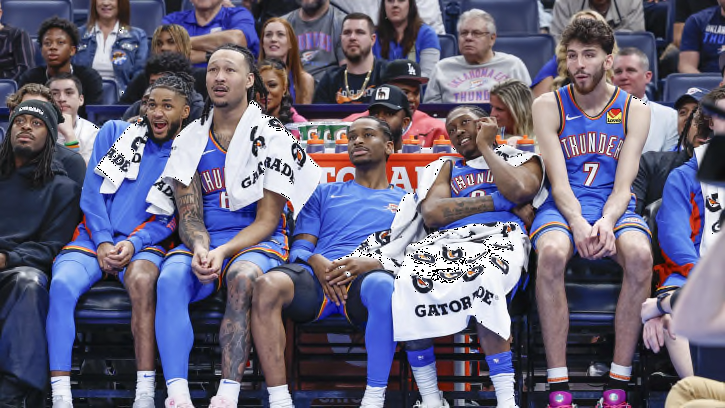
Stiles Points: Setting the Expectations for the OKC Thunder in the NBA Playoffs
The Oklahoma City Thunder are the No. 1 Seed in the Western Conference, but the expectations can not get out of hand.
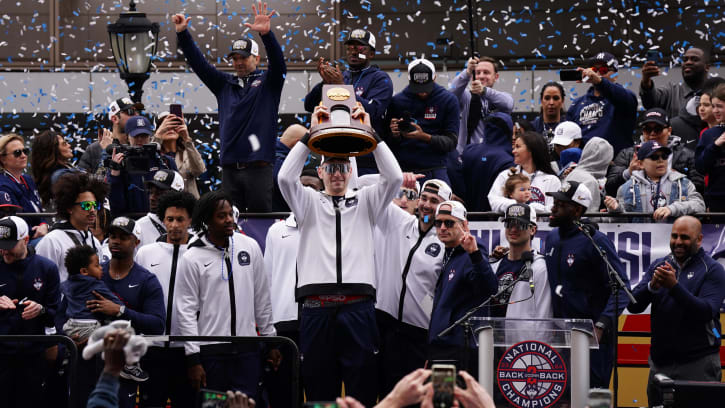
NBA Mock Draft: Rockets Grab Frontcourt Pairing for Alperen Sengun
Houston continued to bolster their frontcourt in the most recent Draft Digest mock draft.
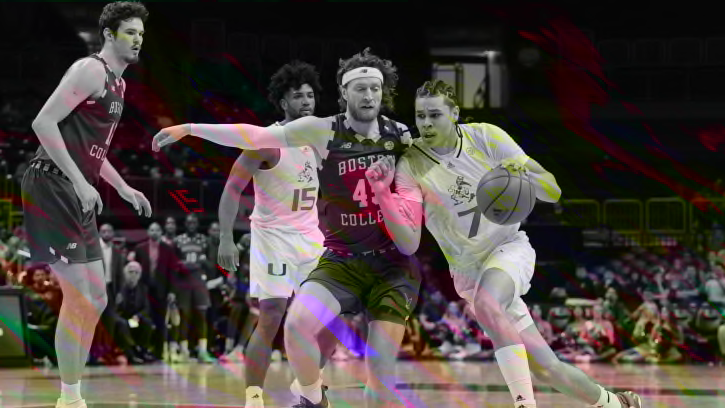
Kyshawn George Can Prove Better in the NBA Than College
The Miami Hurricanes Swingman could find more success in the NBA than the college game allowed.

Paul Skenes Dominates the Minors Again, Doing Best to Force Major League Call-Up
The Pittsburgh Pirates have said they don't want to rush top prospect Paul Skenes to the Majors, but how long can they really keep him down for?
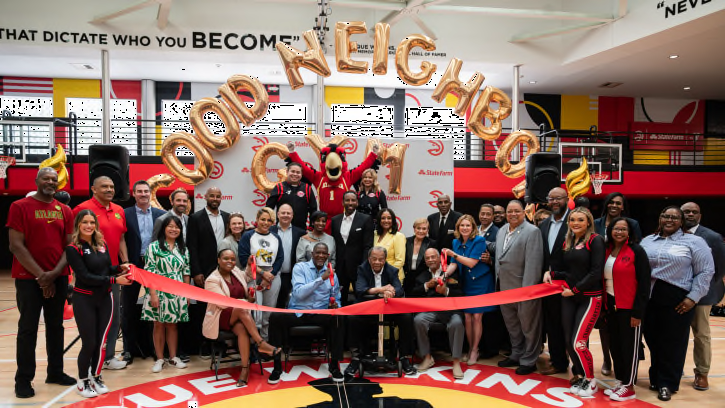
Hawks and State Farm Unveil 10th Good Neighbor Club at the Andrew and Walter Young Family YMCA in Southwest Atlanta
Yesterday, the Atlanta Hawks and State Farm unveiled a newly renovated, multi-functional Good Neighbor Club at the Andrew and Walter Young Family YMCA in Southw
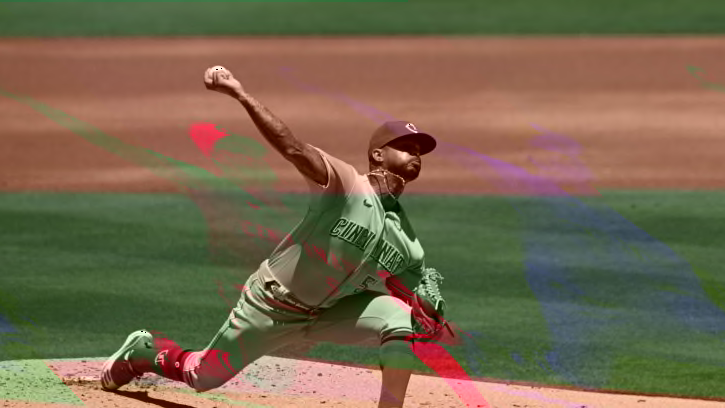
Milwaukee Brewers Trade Recently DFA'd Pitcher to Boston Red Sox, Acquire Cash
The Milwaukee Brewers have traded starting pitcher Vladimir Gutierrez to the Boston Red Sox after having thrown a pitch for them. The former Reds prospect will now work with the new Red Sox' pitching gurus to try to re-find stability in his career.
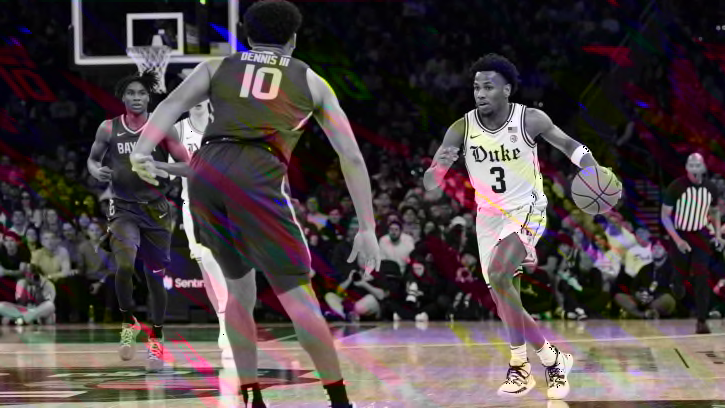
Duke Basketball Alum Jeremy Roach Shuts Down NIL Rumor
The outbound Duke basketball transfer may not have 1.5 million reasons to play for Baylor.
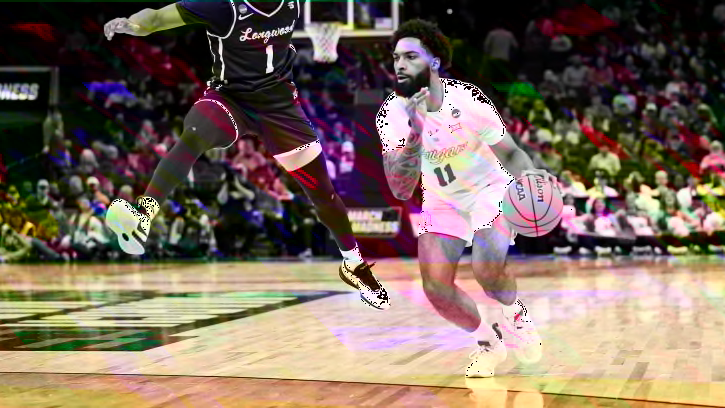
How Damian Dunn Fits With Pitt
Damian Dunn could be a perfect fit for the Pitt Panthers if his teammates take some steps forward.
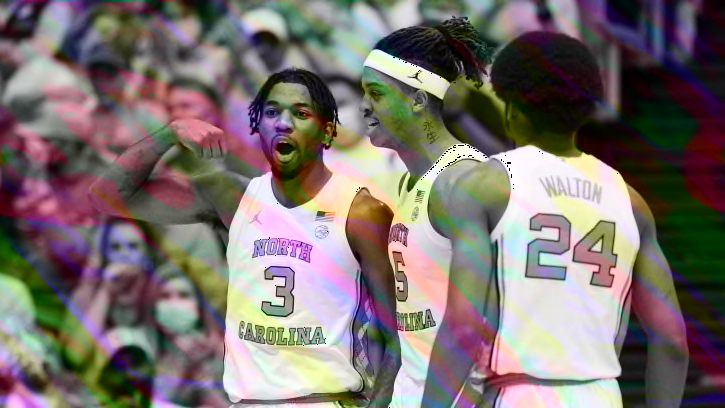
Crazy Times: Ex-UNC Basketball Wing Commits to Nearby Rival
The Wolfpack landed former UNC basketball reserve Dontrez Styles from the transfer portal.
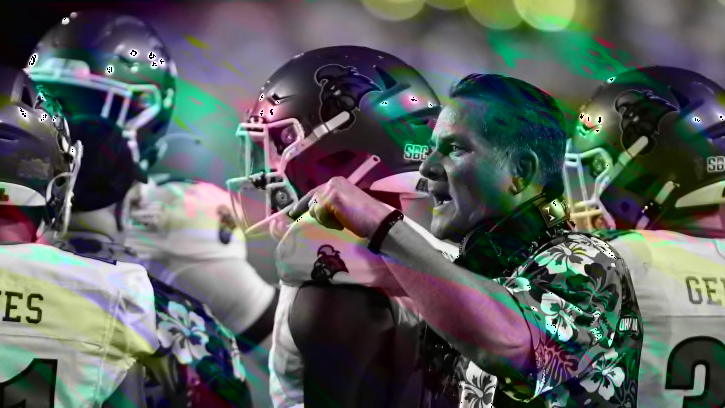
RECRUITING: 2025 Florida QB Commits To Coastal Carolina
Chris Denson of Plant City will be a Chanticleer
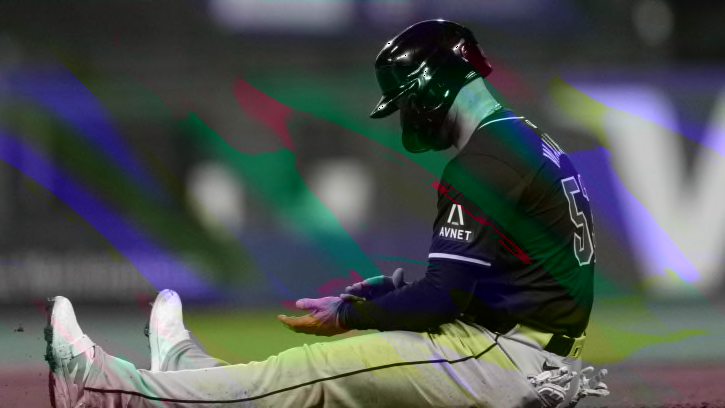
Ryne Nelson Injured in D-backs 5-0 Loss to Giants
The offense was shut down and defensive mistakes led to multiple runs for San Francisco late.
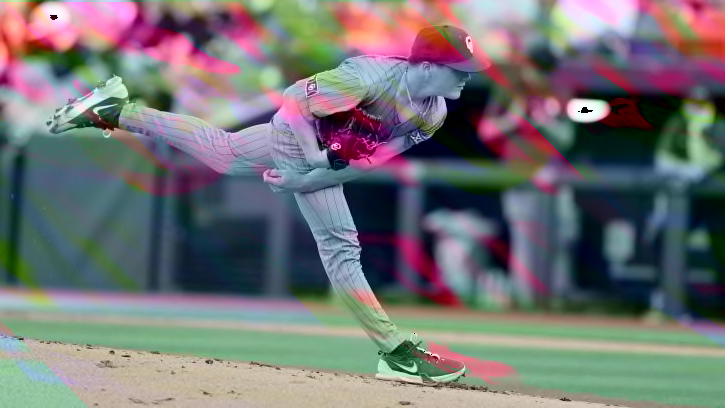
OU Baseball: Braden Davis, Oklahoma Open BYU Series With Big Win
The Sooners' left-hander struck out 11 and OU's hitters jumped on top early, and the bullpen did just enough to hold off the Cougars in their opener in Provo.
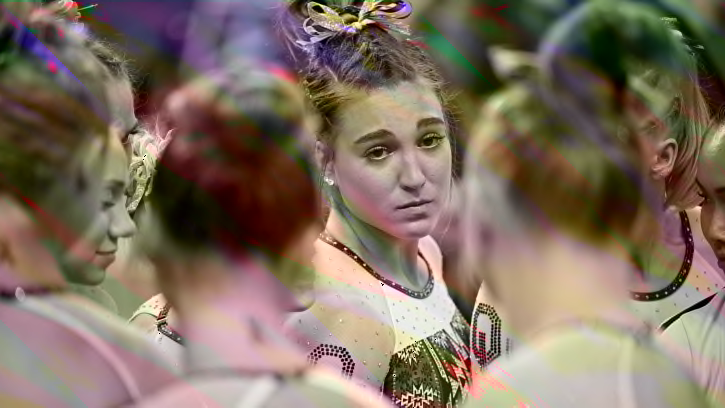
OU Gymnastics: Oklahoma's Bid for Three Straight NCAA Titles Falls Flat
The Sooners have had a dominant season, but in the NCAA semifinals started slow, endured numerous falls and couldn't catch up.